At a Glance
- San Diego is debating an annual tax on vacant second homes as cities nationwide grapple with housing supply and property rights
- Nashville's East Bank may be getting a children's museum, a signal that the area is shifting from speculative development to lived-in neighborhood
- Women were legally barred from obtaining credit without a male co-signer until 1974 — and real estate was often the only path around that barrier
- BDG Partners has new listings in Brentwood, Hillsboro Village, and Germantown
Four Fascinating Facts
🗳️ In August 1920, the future of women's suffrage came down to Tennessee. The state became the decisive 36th vote needed to ratify the 19th Amendment, and the margin was razor thin. A 24-year-old legislator, Harry Burn, reversed his position at the last minute after receiving a letter from his mother urging him to support the amendment. With that vote, Tennessee tipped the balance and formally granted women the right to vote nationwide, placing the state at the center of one of the most consequential political shifts in American history.
🌍 Barcelona recently nearly doubled its hotel guest tax, pushing nightly visitor fees as high as $17 per person in response to overtourism and housing pressure. The move comes after years of resident frustration over rising rents and the growth of short-term rentals, with local leaders even proposing a full ban on vacation rentals by 2028. While Nashville's economy thrives on tourism, cities like Barcelona are becoming case studies in what happens when visitor demand begins to compete directly with housing supply, forcing governments to rethink the balance between growth and livability.
🏦 It was not until 1974, with the passage of the Equal Credit Opportunity Act, that women in the United States could obtain credit cards and loans without a male co-signer. For decades prior, access to capital was legally restricted, which meant property ownership was often one of the only viable paths to financial independence and wealth building. Real estate was not just shelter. For many women, it was leverage in a system that offered few other options.
🏠 San Diego voters will soon decide whether to impose an $8,000 to $10,000 annual tax on vacant second homes, with additional penalties for corporate-owned properties that sit empty more than half the year. City leaders estimate more than 5,000 homes currently qualify as vacant, and the proposal is framed as a way to nudge unused housing back into the market amid rising affordability concerns. While not aimed at short-term rentals, the debate mirrors a broader national tension between property rights and housing supply, one that tourism-driven cities like Nashville continue to navigate as growth reshapes who gets to live where.
BDG Coming Soon and Just Listed
9493 Grand Haven Dr, Brentwood, TN 37027 6 BD | 8 BA | 5,715 SF | $2,799,900
Custom Aspen Construction home in Raintree Reserve featuring two main-level en suite bedrooms, a private office, and oversized hidden pantry. Every bedroom offers a private bath. The lower level includes a sixth en suite, second laundry, full living area, and expansive storage with room to expand. Private Brentwood setting.
2001 Convent Pl, Unit 7, Nashville, TN 37212 4 BD | 4 BA | 2,164 SF | $849,900
Rare opportunity in Hillsboro Village just steps from Vanderbilt, Belmont, and Centennial Park. Light-filled open plan with hardwoods, chef's kitchen, and refined finishes throughout. Private rooftop deck with skyline views and secure off-street parking complete this walkable Nashville retreat.
1802 B 7th Avenue North, Nashville, TN 37208 3 BD | 3 BA | 2,100 SF | $919,900
Designed for seamless indoor-outdoor living, this single-owner home features open living spaces, a screened porch, turf yard, and irrigation for low-maintenance ease. Upstairs offers 3 bedrooms and a spa-like primary suite. Third-floor bonus with wet bar and rooftop deck with fireplace capture skyline views near Germantown and the East Bank.
From Tourism to Roots
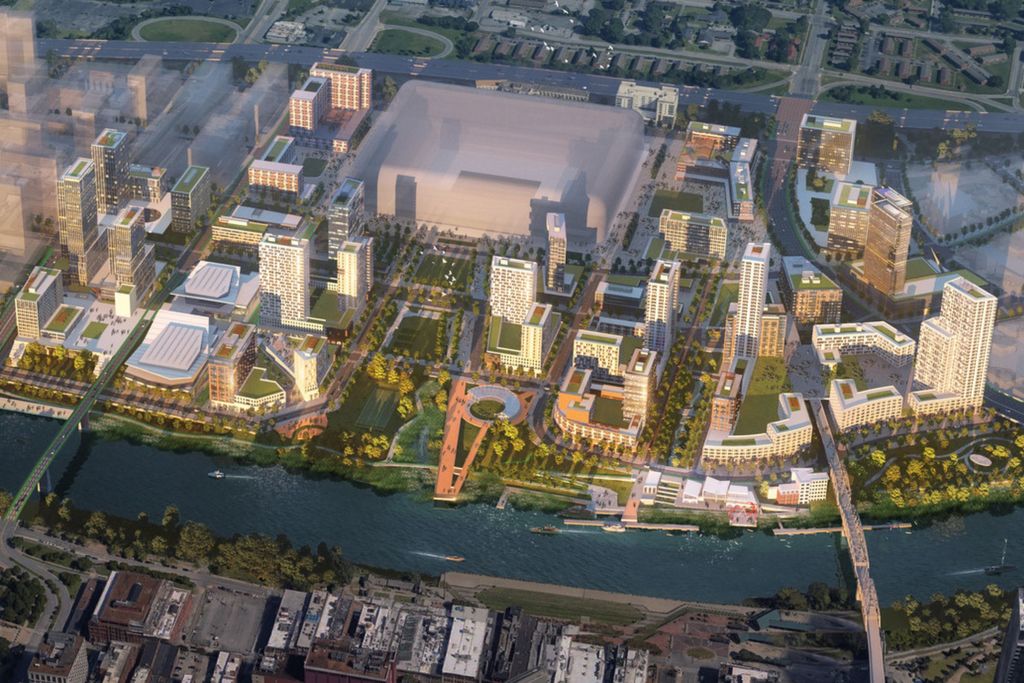
A rendering of Nashville's East Bank transformation, including the 47-acre East Bend site where the Music City Children's Museum is in discussions to locate. Image courtesy of the East Bank redevelopment plan.
Nashville may soon get a new children's museum.
The Music City Children's Museum announced it is in active conversations with the ownership group behind the 47-acre East Bend redevelopment along the river. After years of searching for a permanent site, organizers say the project is closer to reality than ever before.
The location is not accidental.
East Bend sits inside the broader East Bank transformation, one of the most consequential redevelopment zones in the city's future. For years, the conversation has centered around offices, infrastructure, corporate campuses, and entertainment. A children's museum shifts that narrative.
When a district starts planning for children, it signals something different than when it plans for tourists.
Tourism builds revenue. Corporate relocation builds daytime population. Institutions for families build roots.
For those of us who watch how property behaves over time, this is the interesting part. Cultural anchors shape housing demand patterns. They influence who chooses to live nearby. They help convert a development from concept to community.
Nashville is no longer just absorbing growth. It is deciding what kind of growth it wants.
There has been some debate around the phrase "first children's museum," given the long history of the original Nashville Children's Museum and what evolved into today's Adventure Science Center. But the more relevant question is not historical branding. It is capacity.
Does Nashville now have enough density, enough young families, enough long-term residents to support multiple child-centered institutions?
The answer increasingly appears to be yes.
As more families choose urban neighborhoods over suburban distance, demand follows. And when family-focused institutions land in redevelopment corridors, they do more than entertain. They stabilize.
Cities are often measured by skylines and cranes.
But you can tell a lot about a market by where children spend their Saturdays.
If this museum moves forward, it may mark a subtle but important shift in the East Bank story, from speculative future to lived-in neighborhood.
And that is when real estate changes character.
Check out this article next