At a Glance
- Belle Meade Boulevard stretches about six miles from Harding Road to Percy Warner Park
- Completed in 1913, its central median originally carried an electric streetcar line
- Colonel Luke Lea planned the boulevard to open residential development west of Nashville
- The boulevard terminates at the WPA-era limestone Allee at the Warner Park entrance
- It hosts the annual Boulevard Bolt and remains the defining landscape of the City of Belle Meade
Some streets simply connect neighborhoods.
Belle Meade Boulevard created one.
Long before Belle Meade became one of Nashville’s most recognizable addresses, the land surrounding today’s boulevard was still being transformed from farmland into residential estates. What ultimately tied everything together wasn’t a subdivision or a development plan.
It was a road.
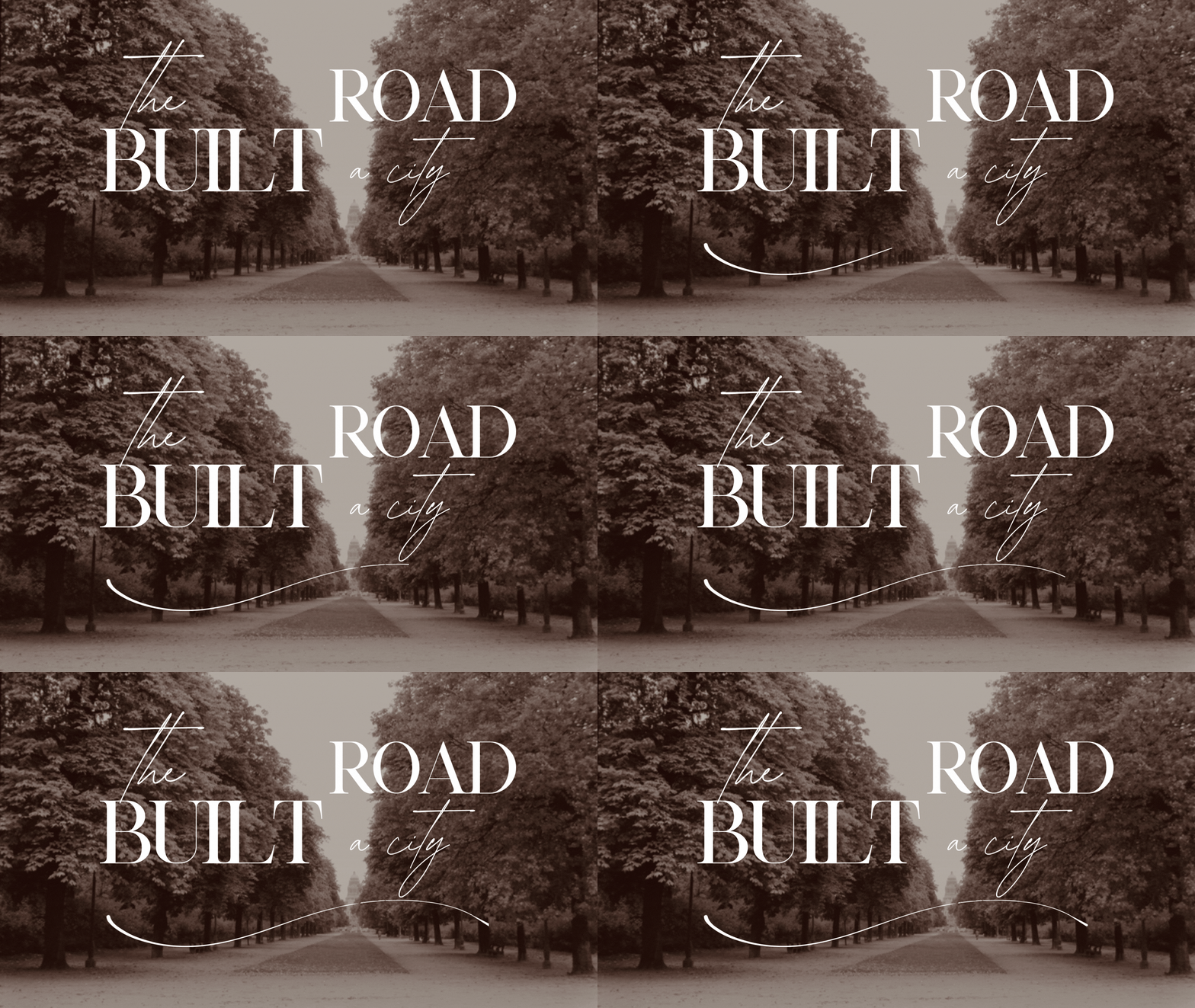
More than 110 years after its construction, Belle Meade Boulevard remains the defining feature of the City of Belle Meade. Stretching approximately six miles from Harding Road to the entrance of Percy Warner Park, it serves as the city’s front porch, gathering place, fitness trail, historic landmark, and one of the most recognizable drives in Tennessee.
Built Around a Streetcar
One of the biggest misconceptions about Belle Meade Boulevard is that the median was always intended as landscaping.
It wasn’t.
When Colonel Luke Lea envisioned expanding residential development west of Nashville in the early 1900s, transportation was everything. His solution was ambitious for the era.
Construct a grand boulevard wide enough to accommodate two roadways separated by an electric streetcar line.
Completed in 1913, the center median originally carried the Nashville Railway and Light Company’s trolley, connecting downtown Nashville to the newly developing Belle Meade community. The boulevard wasn’t simply transportation infrastructure. It became the framework upon which an entirely new residential community would grow.
Today the trolley is gone.
The median remains.
The Median That Defines Belle Meade
Unlike nearly every divided roadway in Middle Tennessee, Belle Meade Boulevard’s median was never reduced to concrete or turn lanes.
Instead, it evolved into a continuous park like landscape.
Towering hardwoods.
Seasonal flower beds.
Open green space.
Public art.
Even today, the median continues to distinguish Belle Meade from virtually every other municipality in the region. Rather than separating traffic, it creates a visual rhythm that slows the experience of driving while reinforcing the neighborhood’s character. The original streetcar alignment became one of Tennessee’s most recognizable urban landscapes.
More Than a Road
The boulevard quickly became far more than transportation.
Luke Lea persuaded the Nashville Golf and Country Club to relocate alongside the boulevard, creating what is now Belle Meade Country Club. Wealthy Nashvillians began building estates nearby, attracted by both the new roadway and the ability to commute into downtown by automobile.
The boulevard effectively determined where Belle Meade would grow.
More than a century later, that same corridor still contains some of Nashville’s most significant residential properties.
Where the City Ends and Nature Begins
Perhaps the most remarkable feature of Belle Meade Boulevard is how it ends.
Rather than dissolving into commercial development or another subdivision, the boulevard terminates at the Belle Meade entrance to Percy Warner Park.
This wasn’t accidental.
The final stretch of roadway was intentionally aligned with the monumental entrance to the park. Beyond the stone wall sits the historic limestone Allee, a dramatic staircase designed by landscape architect Bryant Fleming during the 1930s as part of the Works Progress Administration improvements to Warner Parks. The staircase rises toward one of Nashville’s most beloved trail systems and scenic overlooks.
For generations of Nashvillians, reaching the end of Belle Meade Boulevard has marked the beginning of something else.
Morning runs.
Weekend hikes.
Bike rides.
Quiet walks.
A place where the city gives way to the woods.
The Boulevard Bolt
Every neighborhood develops traditions.
Belle Meade has the Boulevard Bolt.
Each year, runners gather for one of Nashville’s most recognizable road races, covering five miles almost entirely along Belle Meade Boulevard. The course showcases the boulevard’s long, uninterrupted stretches, gentle curves, mature canopy, and iconic median before returning to its starting point.
The race has become another reminder that Belle Meade Boulevard functions as more than infrastructure. It has become part of the community’s identity.
Still Defining the City’s Future
More than one hundred years after its completion, Belle Meade Boulevard continues to shape conversations about the city’s future.
Discussions surrounding pedestrian improvements, traffic calming, landscaping, and preservation consistently return to one question:
How do you improve safety while protecting one of Tennessee’s most historic roadways?
That ongoing balance reflects the importance residents place on preserving not only the boulevard itself, but the character it has created for generations.
A Boulevard Unlike Any Other
Many cities have beautiful streets.
Few have streets that created the city around them.
Belle Meade Boulevard began as a transportation corridor. It became a catalyst for residential development, the address for some of Nashville’s most significant homes, the front door to one of America’s great urban parks, and today remains the defining landscape of the City of Belle Meade.
For more than a century, nearly every chapter of Belle Meade’s story has started on this boulevard.
And for countless Nashvillians, it still does.