At a Glance
- Nashville’s new enclosed Nissan Stadium is scheduled to open in 2027 at a cost of approximately $2.1 billion.
- Studies commissioned for the project estimate $20.9 billion in direct spending and $33.7 billion in total economic impact over 30 years.
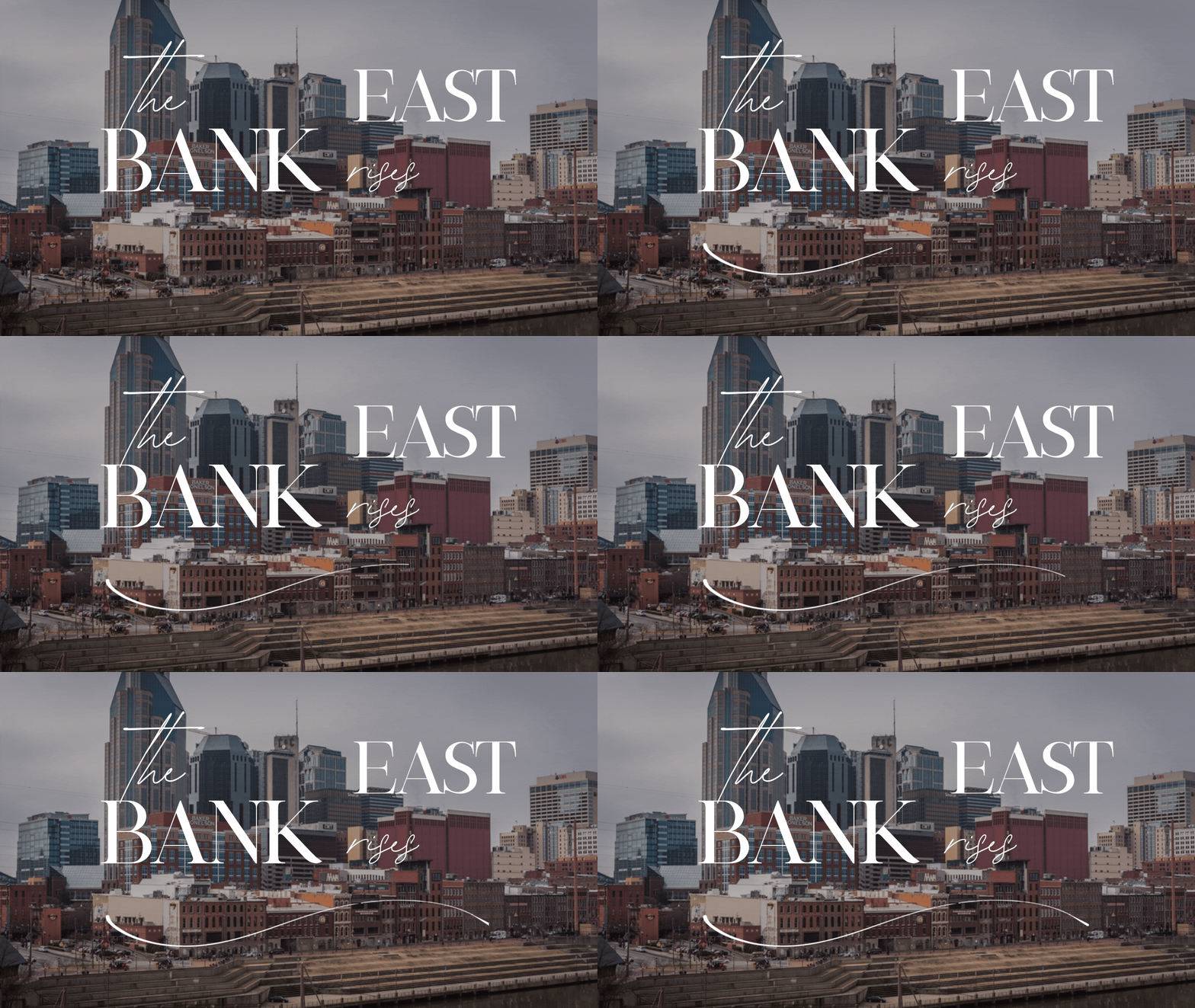
- The venue anchors the East Bank redevelopment, converting parking lots into a mixed-use riverfront neighborhood.
- Because the design is enclosed, Nashville has already been awarded Super Bowl LXIV in 2030.
- Traffic congestion and the debate over public investment remain the project’s biggest open questions.
Introduction
Construction of Nashville’s new enclosed Nissan Stadium represents one of the most ambitious development projects in Tennessee history. Scheduled to open in 2027, the approximately $2.1 billion venue isn’t simply replacing the current stadium; it’s expected to redefine the city’s East Bank, attract world-class events, and generate billions in economic activity over the coming decades. Supporters see it as an investment in Nashville’s future, while critics question its cost and its impact on traffic, affordability, and taxpayers.
So what will the stadium really mean for Nashville?
A New Economic Engine
Perhaps the most significant argument in favor of the new stadium is its projected economic impact.
According to studies commissioned for the project, the stadium is expected to generate approximately $20.9 billion in direct spending and $33.7 billion in total economic impact over the next 30 years. Construction alone is projected to create more than 19,000 jobs, while long-term operations are expected to support nearly 5,000 jobs annually. (Tennessee Titans Stadium)
Those numbers extend well beyond football games.
Every major event creates demand for:
- Hotels
- Restaurants
- Bars
- Transportation
- Retail
- Entertainment
- Event staffing
- Security
- Hospitality services
For a city already built around tourism, another year-round entertainment venue creates opportunities to diversify Nashville’s economy beyond Broadway.
Tourism Will Reach Another Level
The current Nissan Stadium has hosted NFL games, concerts, college football, and international soccer.
The new enclosed stadium dramatically expands Nashville’s event calendar.
Because weather will no longer be a limiting factor, Nashville becomes competitive for:
- Super Bowls
- NCAA Final Fours
- College Football Playoff games
- WrestleMania
- Major concerts
- International soccer tournaments
- Large conventions and entertainment events
The NFL has already awarded Super Bowl LXIV (2030) to Nashville, underscoring how the enclosed venue changes the city’s ability to compete for marquee events. (AP News)
Instead of relying primarily on summer tourism, Nashville could become a year-round destination for major sporting and entertainment events.
The Transformation of Downtown
Perhaps the biggest change won’t actually be inside the stadium.
It will happen around it.
The stadium serves as the centerpiece of Nashville’s East Bank redevelopment, opening the door for:
- New residential neighborhoods
- Parks and green spaces
- Restaurants
- Hotels
- Retail
- Office developments
- Riverfront improvements
- Expanded pedestrian connections
City leaders envision turning what is currently dominated by parking lots into a mixed-use neighborhood that reconnects downtown with the Cumberland River. Projected new development is also expected to generate significant long-term revenue for Metro Nashville. (Tennessee Titans Stadium)
The skyline east of the river will likely look dramatically different by the early 2030s.
Sports Become Bigger Business
Professional sports increasingly drive city branding.
The new stadium positions Nashville alongside cities capable of hosting the nation’s largest sporting events.
Benefits include:
- Higher national exposure
- Increased television coverage
- More corporate investment
- Enhanced recruiting for conventions
- Growth in youth and amateur sporting events
It also strengthens Nashville’s reputation as a destination city rather than simply a music city.
Traffic: Nashville’s Biggest Challenge
No discussion is complete without acknowledging traffic.
Anyone who has attended a Titans game or major concert knows congestion around downtown is already significant.
Adding larger events and increased development will likely create additional pressure on:
- Interstate 24
- Interstate 40
- Interstate 65
- Korean Veterans Boulevard
- Woodland Street
- Shelby Avenue
- Downtown parking
Transportation improvements, pedestrian infrastructure, and transit investments will be critical if the city hopes to prevent the stadium from worsening existing congestion. Community discussions have consistently highlighted parking and access as major concerns during construction and planning. (Reddit)
The Debate Over Public Investment
No major stadium project comes without controversy.
Supporters argue the investment will pay for itself through tourism, tax revenue, jobs, and long-term development.
Critics question whether public funding for sports venues consistently delivers the promised economic returns and whether those funds could have addressed priorities such as schools, affordable housing, or transportation. (Tourism Economics)
That debate will likely continue long after the ribbon is cut.
Looking Ahead
The new Nissan Stadium isn’t simply replacing an aging football stadium.
It represents a long-term vision for what Nashville wants to become.
Whether viewed as an economic investment or a controversial public project, there’s little doubt the stadium will reshape downtown, attract international attention, and influence how residents and visitors experience Music City for decades.
Like the AT&T Building became a symbol of Nashville in the 1990s, the new Nissan Stadium may become one of the defining landmarks of the city’s next generation.