Radnor Lake sits just south of downtown Nashville, bordered by Forest Hills and Oak Hill. It is one of Middle Tennessee's most protected natural areas, but its origins were industrial.
At a Glance
- Built in 1914 as railroad infrastructure and converted to a State Natural Area in 1973
- Conservation-first designation limits activity to hiking, wildlife observation, and seasonal fishing
- The Harris Ridge Trail Project adds 1.5 to 2 miles of new trail connecting Franklin Road to the existing trail system
- For Oak Hill, Forest Hills, and Brentwood, the preserve functions as a permanent conservation boundary
Early History and Purpose
Radnor Lake was constructed in 1914 by the Louisville and Nashville Railroad as a water source for steam locomotives. The dam created a reservoir in a wooded valley that had previously been undeveloped. The objective was operational reliability, not recreation.
As diesel engines replaced steam, the railroad no longer needed the reservoir. What remained was a 100 acre lake surrounded by mature forest. By the early 1970s, local conservation advocates recognized its ecological value and pushed to prevent private development.
In 1973, the property became Radnor Lake State Natural Area, now managed by the Tennessee Department of Environment and Conservation. Unlike a traditional park, a state natural area is managed primarily for habitat protection and passive use.
A Conservation First Model
Radnor Lake is intentionally limited in how it is used. There are no athletic fields or commercial concessions. Activities center on hiking, wildlife observation, photography, and limited seasonal fishing. Most trails prohibit dogs to reduce wildlife disturbance.
The preserve supports deer, river otters, turtles, migratory birds, and a range of native hardwood species. For a city that has experienced sustained population growth, the lake remains a controlled and protected environment.
This conservation first framework shapes every expansion decision.
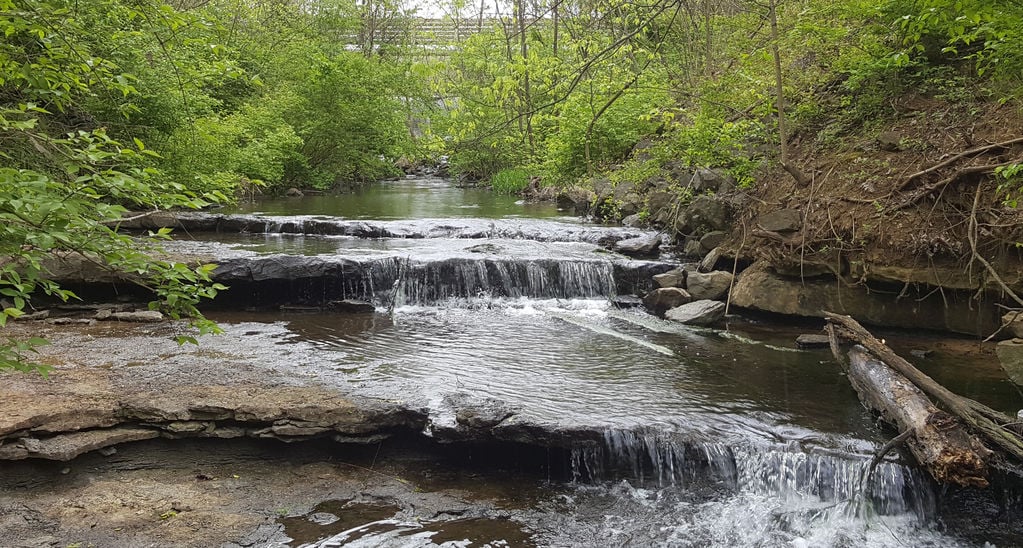
Natural creek habitat within Radnor Lake State Natural Area, Nashville, Tennessee. Image: Adobe Stock.
Growth Pressures and Access Demand
Nashville's growth over the past decade has increased visitation. Radnor Lake regularly reaches parking capacity on weekends. Overflow traffic has affected nearby residential streets in Oak Hill and Forest Hills.
The state's response has focused on measured infrastructure improvements rather than increasing recreational intensity. Expansion efforts are designed to protect the core preserve while improving visitor flow and reducing strain on surrounding neighborhoods.
One of the most significant projects underway is the Harris Ridge Trail Project.
The Harris Ridge Trail Project
The Harris Ridge Trail Project is an expansion initiative designed to add additional trail mileage and redistribute foot traffic within the natural area.
The project involves constructing approximately 1.5 to 2 miles of new natural surface trail along a ridgeline on the eastern side of the preserve. This new hiking trail connects Franklin Road to the existing trail system within the natural area. This alignment is intentional. By routing hikers along higher elevation terrain, the project reduces concentrated traffic near the lake shoreline, where erosion and habitat disturbance are more sensitive concerns.
Key objectives of the Harris Ridge Trail Project include:
- Expanding overall trail capacity without increasing environmental impact
- Reducing congestion on existing high traffic routes
- Improving visitor circulation patterns
- Protecting shoreline and watershed integrity
Trail construction standards emphasize sustainability. The design incorporates grade reversals, natural drainage management, and erosion control methods consistent with conservation best practices. The goal is long term durability without heavy structural intrusion into the landscape.
Importantly, the Harris Ridge Trail is not intended to transform Radnor Lake into a higher intensity recreational destination. It remains a hiking focused expansion aligned with the natural area designation.
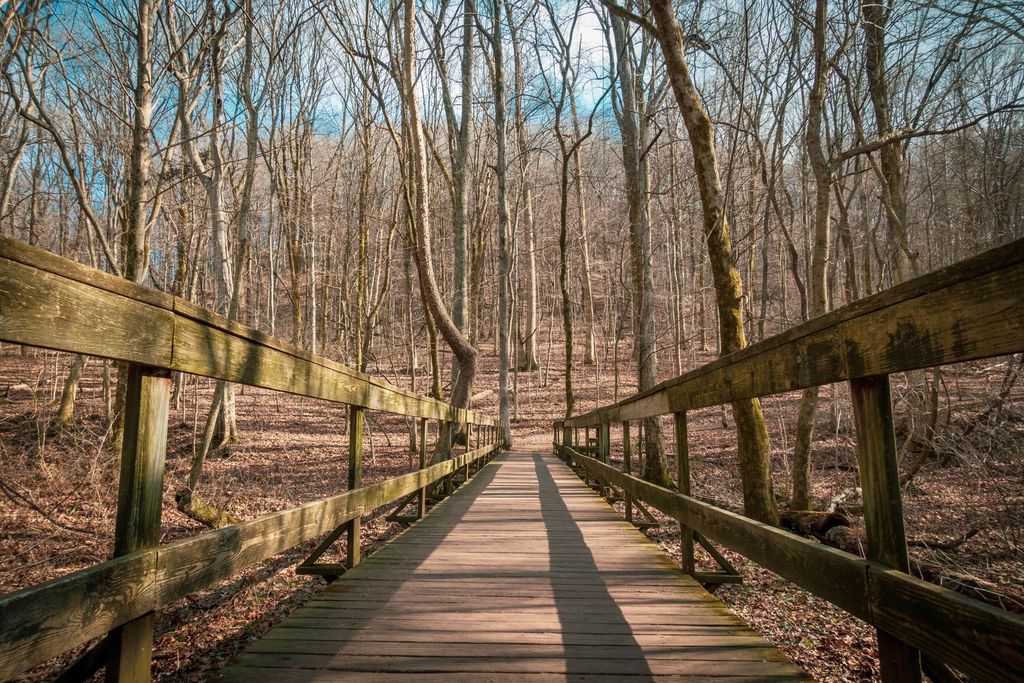
Trail through Radnor Lake State Natural Area, Nashville, Tennessee. Image: Adobe Stock.
Broader Infrastructure Improvements
In addition to the Harris Ridge Trail, the state has advanced improvements to parking, traffic management, and visitor center facilities. These upgrades aim to address operational strain rather than change the character of the preserve.
Watershed protection also remains central. As development continues across southern Davidson County and into Williamson County, stormwater management becomes more critical. Land buffering and controlled trail expansion help maintain water quality and ecological stability.
Market Implications for Surrounding Areas
Radnor Lake functions as a permanent conservation boundary within Nashville's urban footprint. For nearby neighborhoods including Oak Hill, Forest Hills, and parts of Brentwood, that permanence matters.
Protected land reduces the likelihood of adjacent density. It provides a stable natural amenity that is unlikely to be altered by future commercial cycles. In established residential markets, particularly in southern Davidson County, proximity to preserved green space often contributes to long term value stability.
The Harris Ridge Trail Project reinforces that stability. It signals continued public investment in conservation rather than development.
For buyers relocating to Middle Tennessee, access to natural space remains a consistent priority. Radnor Lake's controlled expansion demonstrates a commitment to preserving ecological assets while accommodating responsible growth.
Long Term Outlook
More than a century after it was built to support steam locomotives, Radnor Lake now serves as ecological infrastructure for a growing city.
The Harris Ridge Trail Project reflects the broader strategy:
- Expand access carefully
- Protect sensitive shoreline and habitat
- Manage visitor demand
- Preserve long term environmental integrity
As Nashville continues to expand, the importance of protected natural areas increases. The current expansion efforts do not alter Radnor Lake's mission. They strengthen it.
Radnor Lake remains one of the most disciplined conservation models in Middle Tennessee. The Harris Ridge Trail Project is an extension of that approach, designed to balance access with preservation in a market that continues to grow.

Check out this article next